IoT-Based Smart Water Controller for Commercial
Water management in commercial properties is a critical operational responsibility. Hotels, hospitals, corporate offices, manufacturing plants, malls, educational campuses, and industrial facilities consume large volumes of water daily. Manual monitoring often leads to overflow, dry running pumps, energy wastage, and operational downtime.
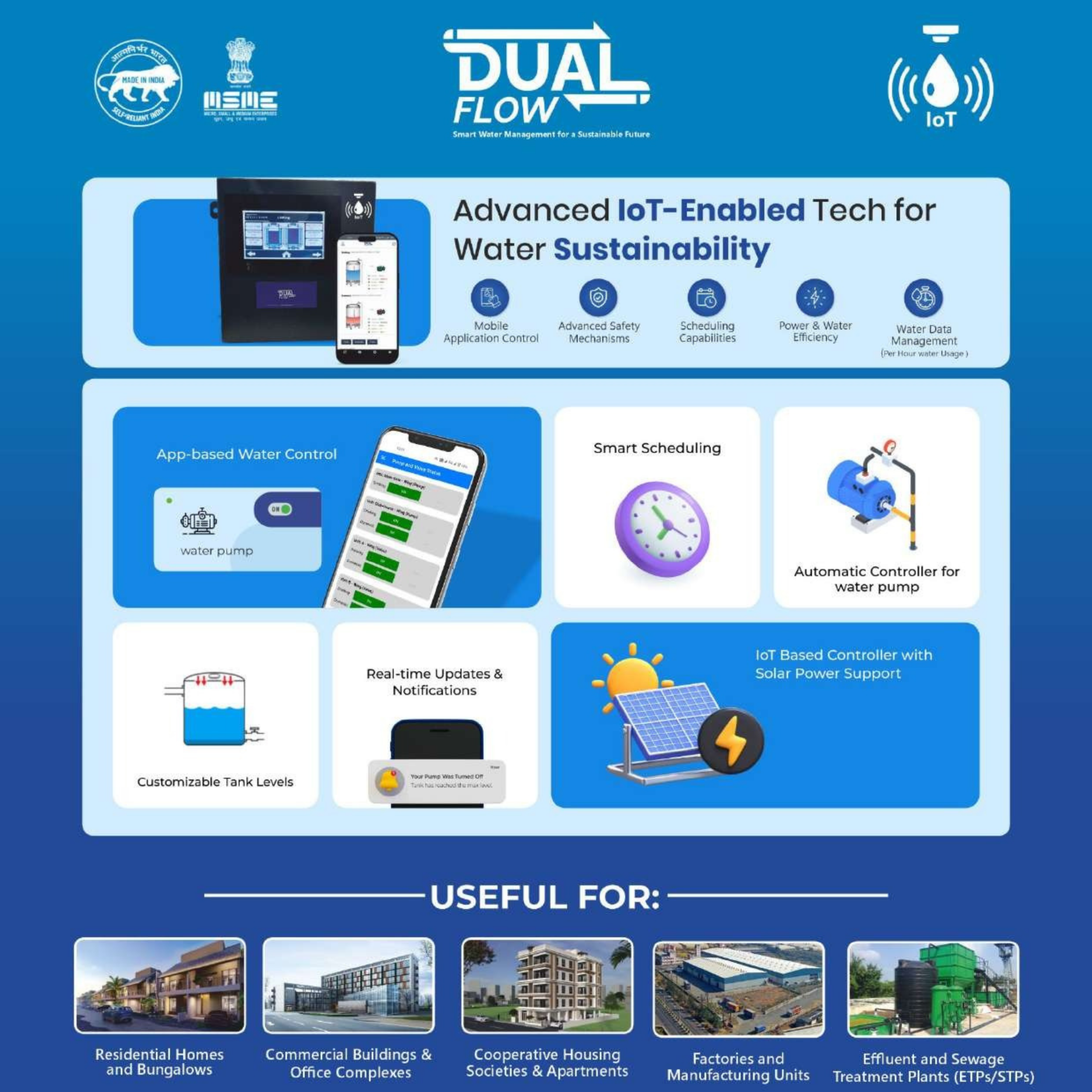
The IoT-Based Smart Water Controller is an intelligent, fully automated water monitoring and pump management system designed specifically for commercial applications. Using advanced sensors, cloud connectivity, and mobile app control, the system ensures efficient water usage, operational safety, and real-time monitoring from anywhere.
Commercial Applications
- Corporate Offices
- Hotels & Resorts
- Hospitals & Healthcare Facilities
- Educational Institutions
- Shopping Malls & Commercial Complexes
- Manufacturing Industries
- Housing Societies & High-Rise Buildings
What is an IoT Smart Water Controller?
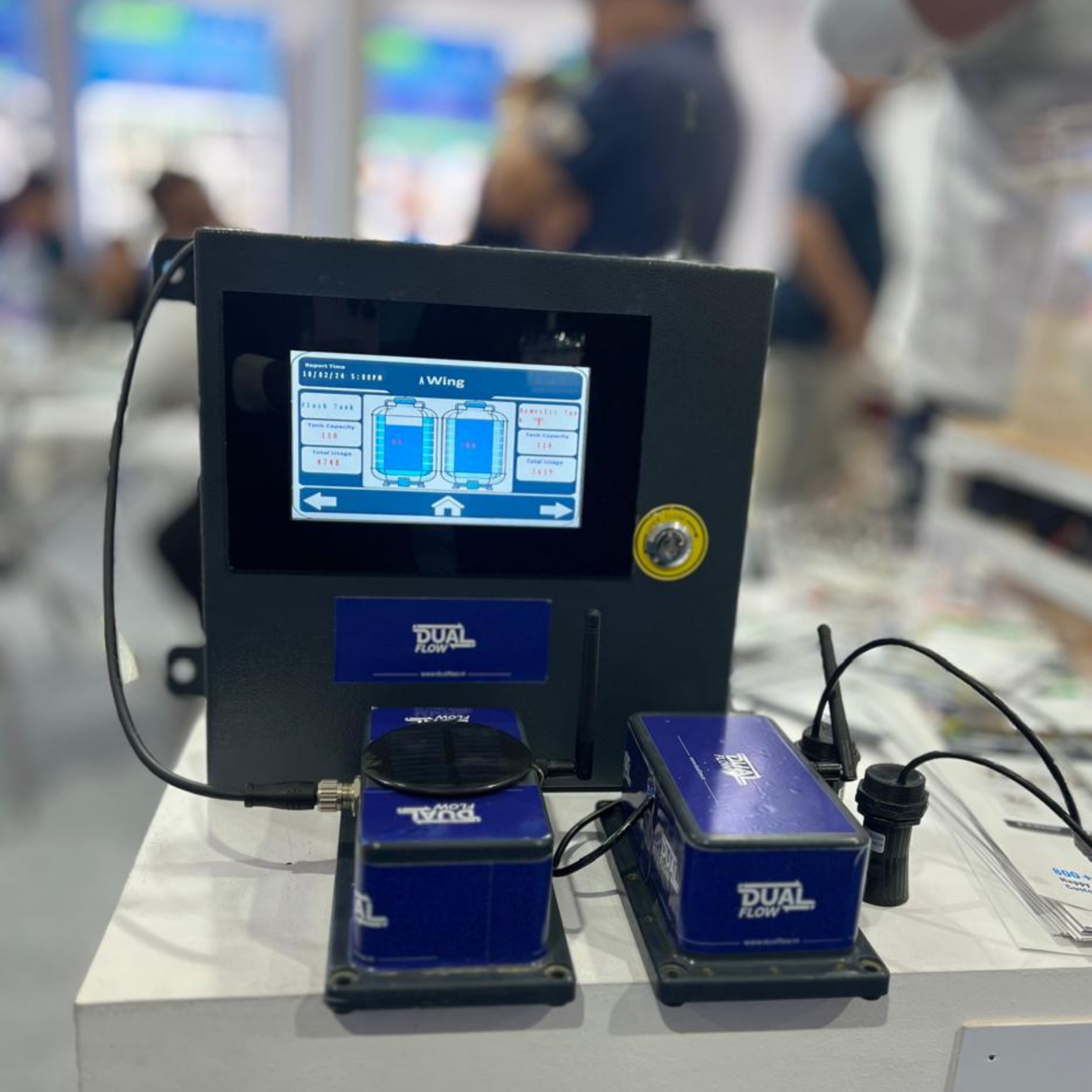
An IoT Smart Water Controller is an intelligent automation system that monitors and manages water levels in overhead tanks and underground sumps using sensors connected to cloud technology.
The system automatically operates water pumps and allows homeowners to monitor and control water systems remotely through a mobile application.
DualFlow eliminates manual dependency while ensuring uninterrupted water availability.
Why Commercial Buildings Need Smart Water Automation
Traditional water management systems depend heavily on manual operation or basic timers. This leads to:
- Water tank overflow and wastage
- Pump dry running damage
- High electricity consumption
- Human dependency for monitoring
- Maintenance costs due to system failures
Installation & Compatibility
New commercial construction projects
Existing pump setups
Borewell
systems
Municipal water supply systems
Industrial treatment plants.
Key Features of DualFlow Smart Water Controller
Real-Time Mobile App Monitoring
- Tank water levels
- Pump status
- Motor health
- Alerts and notifications through Android and iOS mobile applications from any location.
Multi-Tank Management
- Underground sump tanks
- Overhead tanks
- Process water tanks
- Fire reserve tanks
- STP or ETP tanks
IoT Cloud Connectivity
- Remote access
- Live data tracking
- Historical usage reports
- Smart alerts
Overflow Prevention Technology
- Prevents water wastage
- Avoids structural damage
- Reduces operational negligence risks.
Dry Run Protection
- Motors
- Pumps
- Electrical systems
Energy Efficient Operation
- Reduced electricity bills
- Lower carbon footprint
- Sustainable operations.